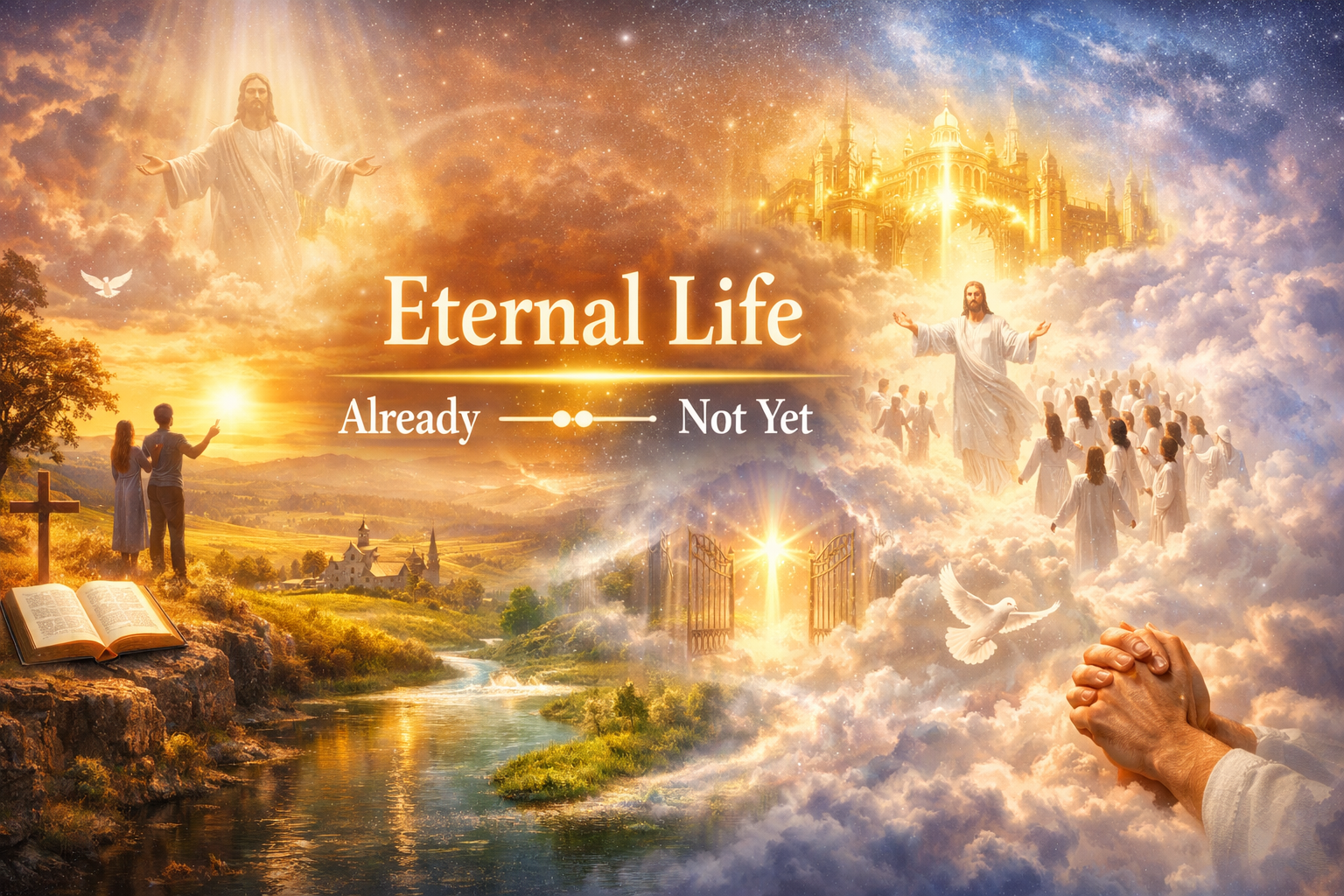
Eternal life in Christian theology unfolds on two timelines at once. Believers truly possess eternal life now through faith in Christ, yet they await its full expression in the future resurrection. This creates an “already, not yet” reality in which eternal life is a present gift and a future hope. Christians live in confidence that life with God has already begun, even while anticipating its final completion.
Eternal life is not merely endless existence. Jesus defines it as knowing God and Jesus Christ, making it deeply relational rather than simply about duration. It involves a perfected relationship with God in which He becomes the supreme joy, replacing lesser attachments. Christ Himself is eternal life, so receiving Him by faith is the same as receiving eternal life.
This idea carries strong biblical and theological foundations. The New Testament frequently uses the Greek terms for “life” and “eternal” to describe a transformed kind of existence. Jewish thought already distinguished between the present age and the age to come, emphasizing quality of life, not just continuity. Without eternal life, a person remains spiritually dead; with it, they are assured they will never perish.
Eternal life flows directly from God's love and His gift of His Son, placing it at the very heart of the gospel. It is an unbreakable union with Christ, sustained by faith and love. This gift becomes most precious when believers experience it as intimate knowledge of and deep delight in God Himself.