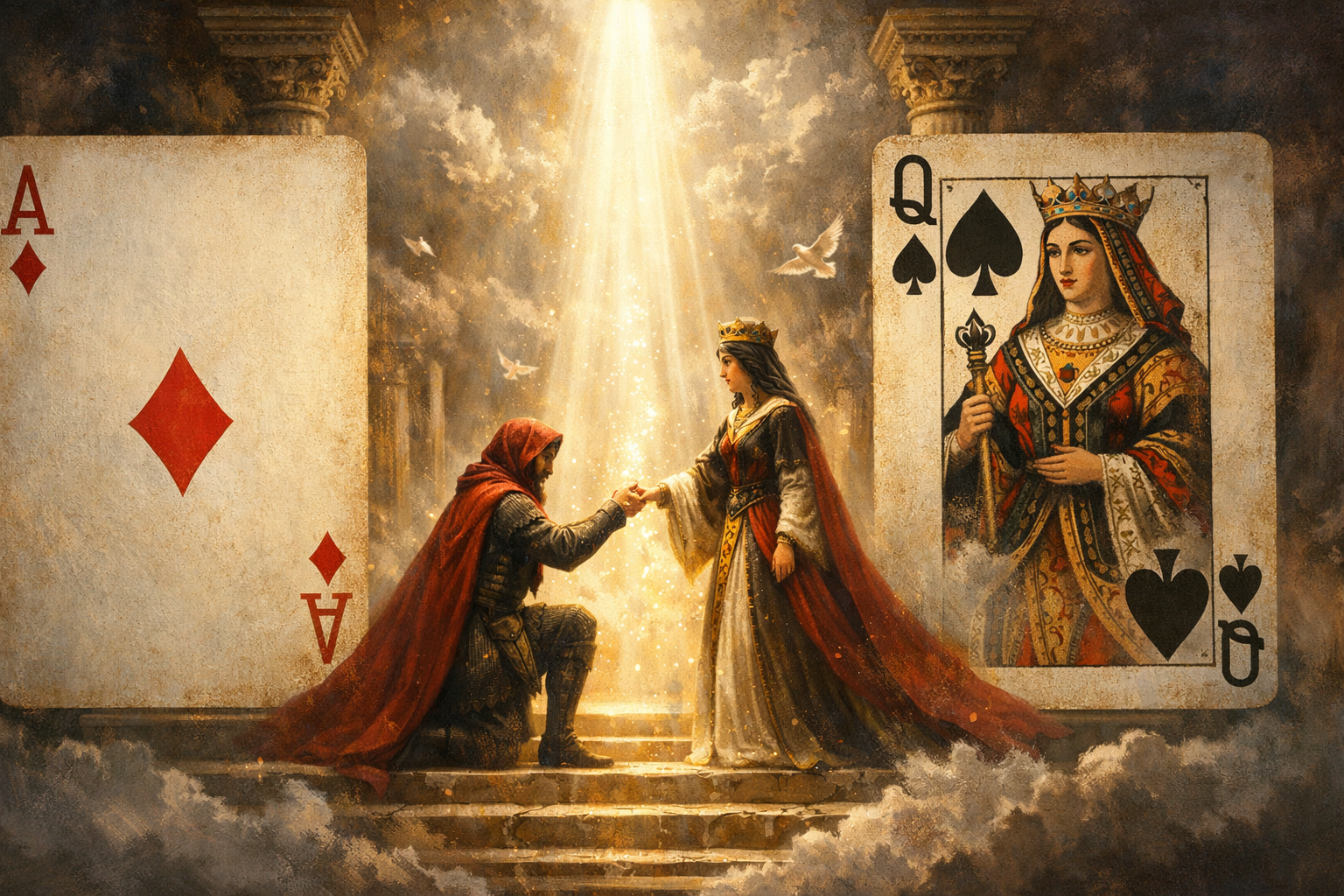
The image presents a symbolic tableau where playing cards become archetypes rather than objects of chance. On the left, the Ace of Diamonds stands upright, its red geometry evoking beginnings, material provision, and decisive clarity. On the right, the Queen of Spades mirrors it with composed authority, suggesting wisdom, discernment, and hidden depths. Between them unfolds a sacred meeting: a kneeling figure offers his hand to a crowned queen beneath descending light. This central exchange reframes the cards as witnesses to covenant rather than competition. The beam from above implies transcendence, aligning the encounter with destiny instead of coincidence. Architectural columns and drifting doves situate the moment in a liminal temple space, neither fully earthly nor fully heavenly. The kneeling posture communicates humility, initiation, and surrender, while the queen's calm stance conveys sovereignty tempered by mercy. Together they embody balance between action and insight, provision and discernment. The Ace signifies the seed of purpose, while the Queen represents mastery over shadow and truth. Their separation across the frame emphasizes polarity, yet the light-filled center resolves tension, suggesting that opposing forces meet through obedience to a higher call rather than personal will. This imagery invites contemplation of vows, timing, and alignment, portraying encounter as ordained convergence where human choice responds to divine initiative, not accidental fortune within ordered mystery beyond calculation and expectation.
In a broader interpretive sense, the composition speaks to divine appointment, a moment prepared across time rather than improvised by desire. The Ace of Diamonds traditionally signifies resources, work, and tangible responsibility, suggesting that provision and calling originate as a single point of trust. The Queen of Spades often carries associations of intellect, discernment, and confronting truth, indicating maturity formed through experience and tested insight. Their facing positions imply recognition: what begins must eventually be governed wisely. The figures between them externalize this principle through narrative action. Kneeling reflects consent, not weakness, while the offered hand symbolizes partnership ratified under higher authority. Light descending from above frames the meeting as revelation, implying that timing matters as much as intention. Doves reinforce peace, spirit, and sanctioned union, while stone columns echo endurance and order. The cards do not dominate the scene; they observe, reminding viewers that symbols serve realities greater than themselves. Altogether, the image suggests that life's critical intersections occur when preparation meets humility. Material paths and inner wisdom converge, producing alignment that feels inevitable only in hindsight. Chance dissolves, replaced by meaning, stewardship, and accountability. The divine appointment portrayed here is quiet yet irreversible, marked not by spectacle, but by consent to step forward when summoned. It affirms guidance persists even when certainty appears absent and trust must precede understanding always.